Rescue planning is the part of fall protection that many sites leave until it is too late. A fall arrest system that stops a fall has only done half the job. After that, someone must bring the worker to safety quickly, without putting rescuers at risk. This guide explains how to build a practical rescue plan and where anchorline and rescue equipment fits.
Written by: Yatin Chaudhary, TsaF. Last updated: 15 October 2026.
Rescue planning: key takeaways
- Plan rescue before work starts, not after a fall.
- Write a plan for each realistic scenario: roof edge, vehicle top, ladder and confined space.
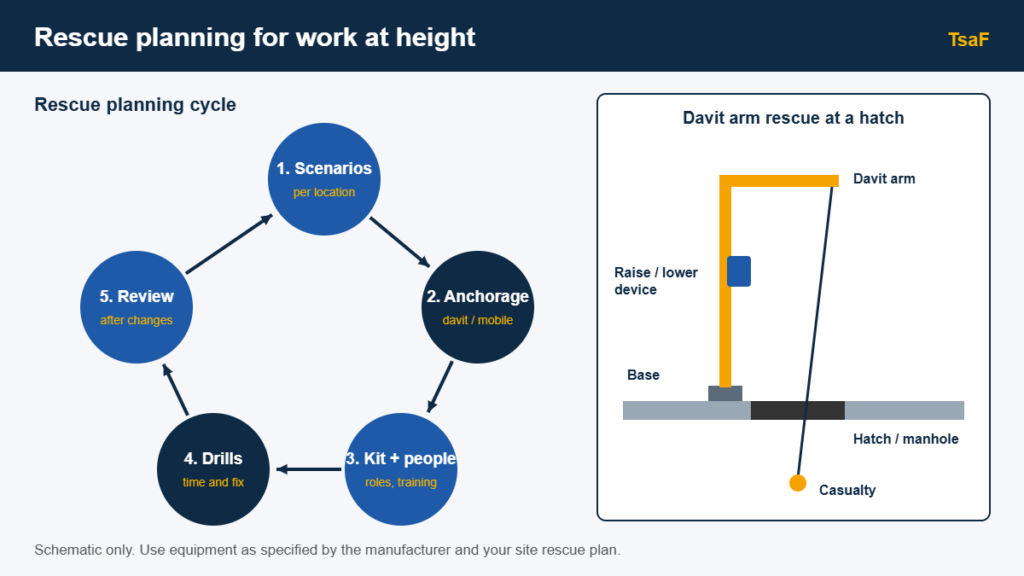
- Choose anchorage for rescue, such as davit arms or mobile anchors, as part of the design.
- Assign roles, train people and keep equipment at the work location.
- Practise the plan with drills, and review it whenever the site changes.
Why rescue planning is part of the design
A worker who falls and hangs in a harness is not safe yet. Prolonged suspension in a harness can quickly become a medical emergency. For this reason, rescue must happen fast, and that only works if the plan exists before anyone goes up.
In practice, this means you design rescue alongside the fall protection system. For example, the choice of lifeline, the fall clearance and the anchorage all affect how easily a rescuer can reach a suspended worker. Similarly, waiting for the fire service is not a plan, because they may not arrive in time or have access.
Scenarios for your rescue planning
Each work location needs its own scenario. Typical examples include:
- Roof edge: a worker suspended over a parapet or at a gutter.
- Vehicle top: a worker hanging beside a tanker or truck at a loading bay.
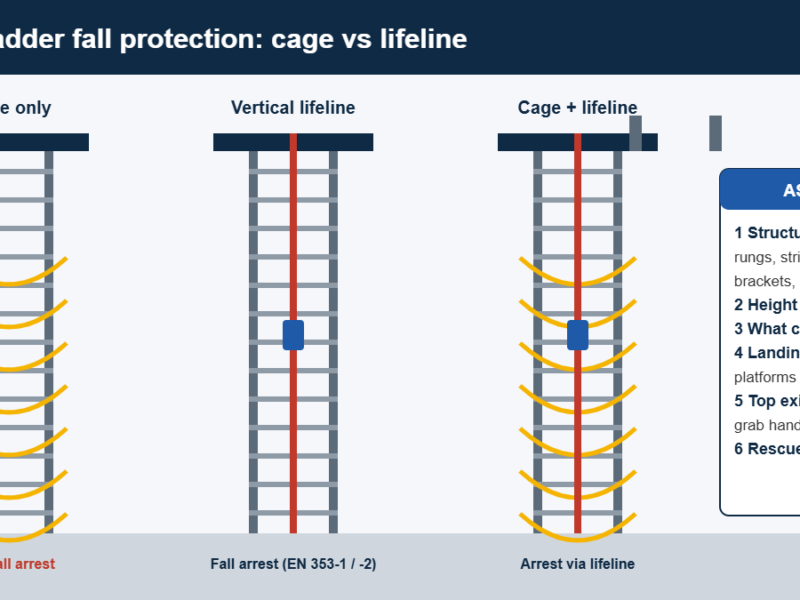
- Ladder: a climber held by a vertical lifeline partway up a fixed ladder.
- Confined space: a worker who needs lifting out through a hatch or manhole.
For each scenario, also consider whether the worker is conscious and able to help, or incapacitated. As a result, the plan may need a method that works without any help from the casualty.
Anchorage for rescue
Rescuers need a secure anchor too. Davit arms provide an overhead anchor at hatches, edges and manholes. TsaF’s FlexiDavit modular arm works with several bases, including floor, side, embedded, flush, fixture and portable bases. So the same arm can serve many locations.
Where no suitable structure exists, mobile anchors fill the gap. For instance, TruckSafe and ConcreteSafe provide portable anchorage at ground level, while BallastSafe suits roofs. For complete kits, see our anchorline and rescue system page.
Equipment and people
Rescue kits typically include raising and lowering devices, connectors and a rescue pole or hook. Above all, the kit must be compatible with the installed fall protection system. Therefore, check that connectors fit the trolley, lifeline or anchor the worker is using.
People matter as much as equipment. Name who leads a rescue, who assists and who calls for medical help on every shift. Then train them on the actual equipment. Finally, agree how the team will communicate, especially on large roofs or noisy plant.
Drills and rescue planning review
A plan nobody has practised is only a document. So run drills in realistic conditions, at the actual work locations, with the actual equipment. Time each drill, note what slowed it down, and fix those issues.
In addition, review the plan after any change to the site, the systems or the teams. For example, a new roof plant layout or a change of contractor can make an existing plan unworkable.
Inspection of rescue equipment
Inspect davit arms, bases and mobile anchors for stability, attachment points, locking mechanisms and labels. Also follow the manufacturer’s inspection intervals for every item in the kit. Keep these records alongside your fall protection register, so that one file shows the status of every system. TsaF’s Annual Maintenance Check can include rescue equipment.
Sources and further reading
- HSE (UK): Work at height guidance.
- OSHA (US): Fall protection.
- Overhead lifeline systems for loading bays.
Frequently asked questions
Fall arrest stops the fall, but the worker is left suspended in a harness. Prolonged suspension can become a medical emergency, so you need a way to recover the worker quickly.
No. They may not arrive in time or be able to reach the location. Your site needs its own plan, equipment and trained people.
Kits typically include a raising and lowering device, connectors, an anchor such as a davit arm or mobile anchor, and a rescue pole or hook. It must be compatible with your installed systems.
Run drills regularly at the actual work locations with the actual equipment, and repeat them after any change to the site, systems or teams.
It should cover each realistic scenario, conscious and incapacitated casualties, rescue anchorage, equipment, named roles on every shift, communication, and how you will get medical help.
Next step in your rescue planning
A rescue plan works best when it is designed with your site and systems in mind. Request a site assessment and a TsaF engineer will review your work at height locations and rescue arrangements.