
A vertical life line system keeps a climber connected to a rope or rail anchor line through a guided fall arrester for the full height of a fixed ladder. On telecom towers, chimneys, storage tanks, silos and roof access ladders in India, it is the most practical way to protect people who climb regularly, because a ladder cage on its own does not stop a fall. This guide explains how to choose between rope and rail types for each structure, which standards apply and how the system should be inspected.
Written by: Yatin Chaudhary, TsaF. Last updated: 22 October 2026.
Key takeaways
- A vertical life line system protects the climber for the whole climb through a guided fall arrester.
- Rope-type systems suit tall structures such as towers and chimneys; rail-type systems suit frequently used ladders.
- TsaF designs vertical lifelines in accordance with EN 353-1:2014+A1:2017 (rigid) and EN 353-2:2002 (flexible).
- Most existing cage ladders can be fitted with a vertical lifeline after the ladder is surveyed.
- Climbers still need a full body harness, training and a pre-use check every time.
What is a vertical life line system?
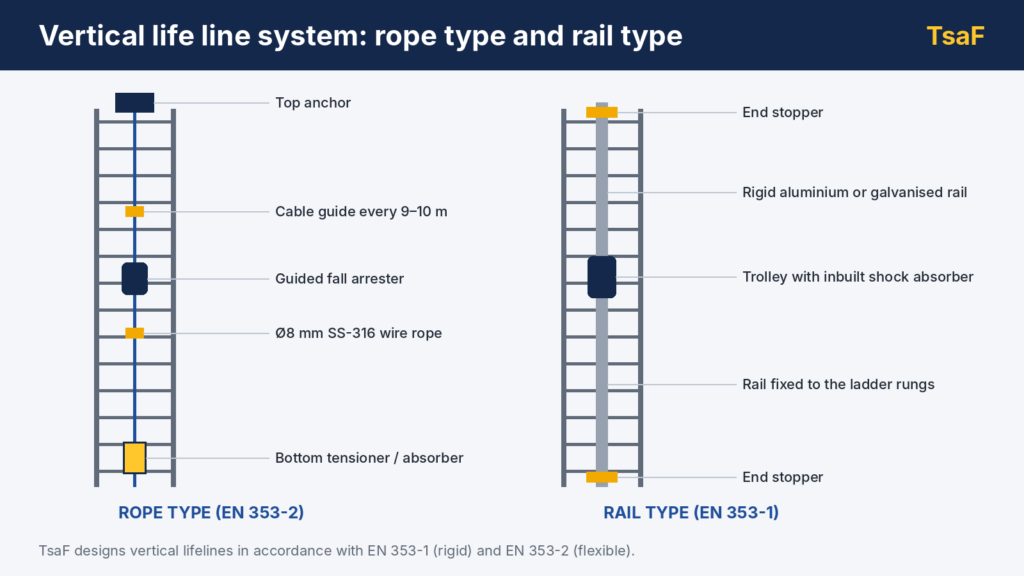
A vertical life line system is a fixed anchor line that runs the height of a ladder or structure. The climber wears a full body harness connected to a guided fall arrester that travels with them on the line and locks if they fall. TsaF supplies two types:
- Rope type: a tensioned Ø8 mm SS-316 wire rope in 7×7 construction, with cable guides every 9 to 10 metres and a shock absorber that limits impact force to under 6 kN.
- Rail type: a rigid aluminium or galvanised steel rail fixed to the ladder, with a trolley that has an inbuilt shock absorber and end stoppers at both ends.
Why is a ladder cage not enough?
A cage gives a climber something to lean against, but it does not arrest a fall. A person who slips can fall inside the cage and strike the hoops or the ladder on the way down. A vertical lifeline keeps the climber attached for the full height, so a slip is stopped close to where it starts.
Which structures need a vertical life line system?
| Structure | What to consider | Type that often suits |
|---|---|---|
| Telecom towers | Tall climbs, outdoor exposure, climbs by field teams | Rope type |
| Chimneys and stacks | Great height, heat and flue gases near the top | Rope type, materials confirmed at design |
| Storage tanks and silos | Outdoor service, corrosion, frequent inspection climbs | Rope or rail, by height and use |
| Roof access ladders | Short climbs, used often by maintenance teams | Rail type |
| Power and transmission structures | Remote sites, climbs during maintenance | Rope type |
The right choice depends on the ladder, how often it is used and the environment, so TsaF confirms the type after surveying each structure. See how we work with telecom towers, power and transmission and oil and gas sites.
Rope or rail: how do you choose?
Choose a rope type when the climb is tall and the ladder is used occasionally, because the rope is light and spans long heights with cable guides every 9 to 10 metres. Choose a rail type when the ladder is used often or by many people, because the rigid rail and trolley give a consistent, smooth action on every climb. Our rope vs rail guide compares the two in more detail.
Which standards apply to a vertical life line system?
TsaF designs its vertical lifelines in accordance with EN 353-1:2014+A1:2017 for rigid anchor lines (rail type) and EN 353-2:2002 for flexible anchor lines (rope type). Refer to the product datasheet for a specific configuration, and to your own site rules. Our page on EN 353-1 vs EN 353-2 explains the difference.
Can a vertical lifeline be added to an existing ladder?
In most cases, yes. Our team first surveys the ladder, its rungs and its fixings, because the line can only be as reliable as the ladder it sits on. Any ladder repairs are identified at this stage, before the line is designed.
How should a vertical lifeline be used and inspected?
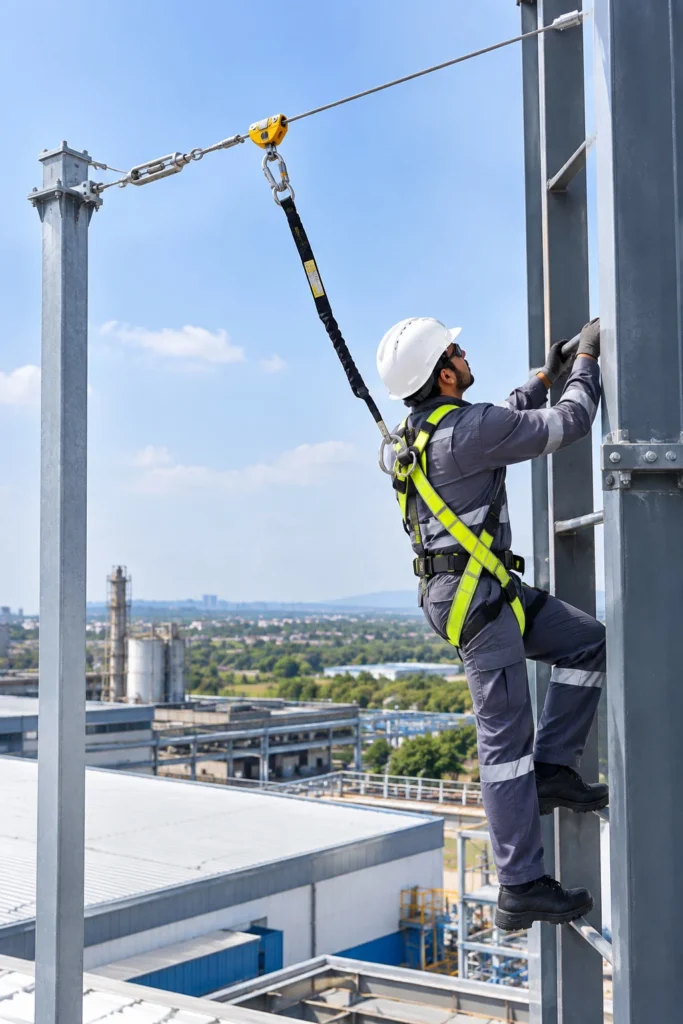
- Each climber wears a suitable full body harness connected to the guided fall arrester.
- Climbers are trained to check and use the equipment; TsaF provides on-site training at installation.
- Users check the line and arrester visually before every climb.
- A formal inspection is done at least once a year. TsaF’s Annual Maintenance Check also function-tests the arrester in both directions.
For more on ladders, read our fixed ladder fall protection guide.
Frequently asked questions
A rope-type vertical life line system often suits telecom towers because it spans tall climbs with cable guides every 9 to 10 metres. TsaF confirms the type after surveying the tower and its ladder.
No. A cage does not arrest a fall. A vertical lifeline keeps the climber connected through a guided fall arrester for the full height of the climb.
TsaF designs it in accordance with EN 353-1:2014+A1:2017 for rigid anchor lines and EN 353-2:2002 for flexible anchor lines.
Yes, in most cases. The ladder, rungs and fixings are surveyed first, and any repairs are identified before the line is designed.
Users check it before every climb, and TsaF recommends a formal inspection at least once a year, including a function test of the arrester in both directions.
TsaF designs, manufactures, installs and maintains each vertical life line system for towers, chimneys, tanks and roof ladders across India. Request a site assessment for your structures.

